Why Every Marketplace Bans Stock Photos in 2026 (And What to Use Instead)
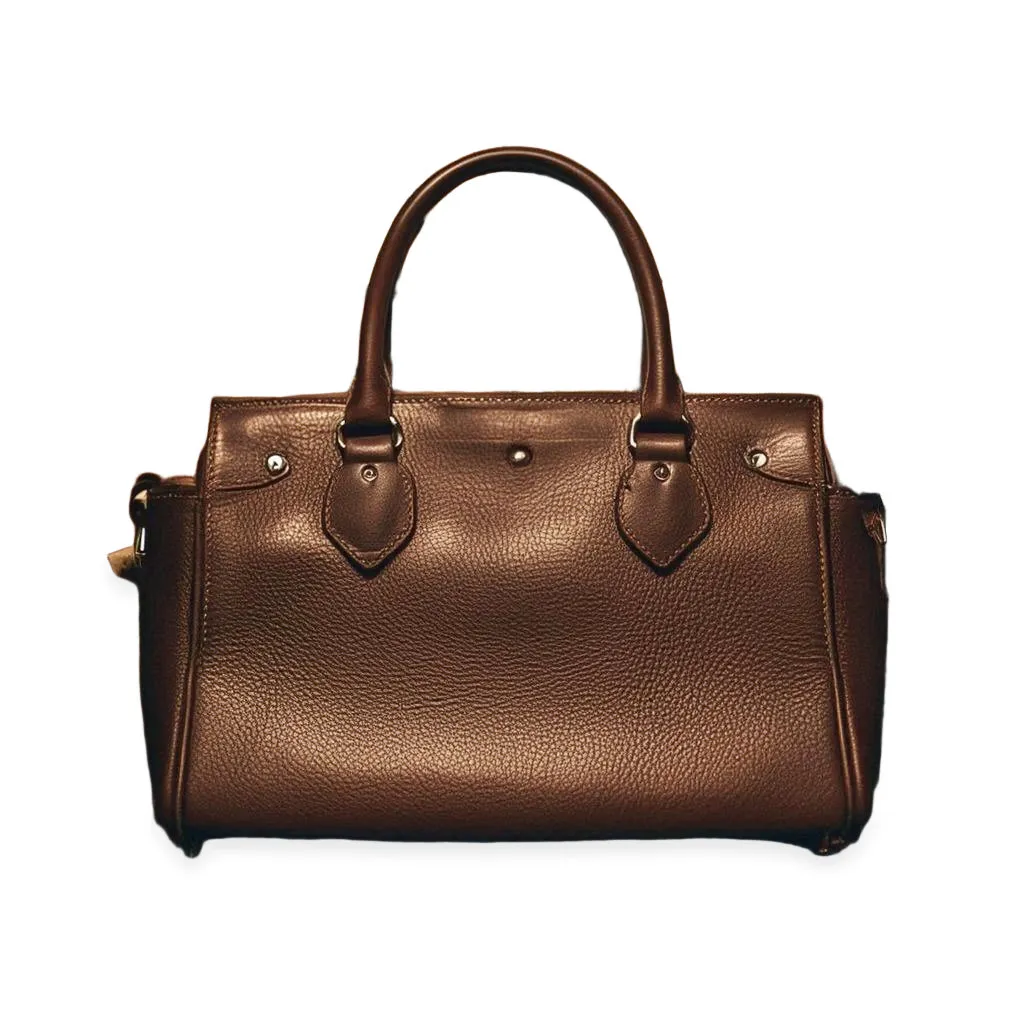
Every major resale marketplace bans stock photos. Copyright law, platform liability, buyer-protection rules — pick your reason, the answer is the same. Reusing brand photos, even for items you genuinely own and ship, can permanently suspend your account and freeze your balance. Most sellers don't learn this rule until the email arrives. Accounts with hundreds of five-star reviews get closed overnight. Payouts get held while orders are still in transit. The appeal process feels like talking to a bot. If that's where you are right now, the first thing to know is you're not alone. The second is that the fix is technical, not philosophical. It's about which photo file you uploaded, not whether the item was real.
TL;DR
- Every major marketplace (Depop, Poshmark, Mercari, eBay, Vinted, Facebook, Grailed) bans brand or stock photos in listings, even for authentic items, because the photo itself is a separate copyrighted work the brand owns.
- Penalties range from listing removal to permanent bans, and platforms can hold seller balances for up to 180 days while disputes resolve.
- The legal fix is to use a photo you took of the item in your hands. The cosmetic fix (clean background, even lighting) is editing your own photo, which every marketplace allows.
How each marketplace handles stock photos
| Platform | Policy quote | Penalty | Balance treatment | Source |
|---|---|---|---|---|
| Depop | "Stock images and other photos from the internet actually belong to the original photographer, so using them to advertise your sales is an infringement of property rights, which is why Depop doesn't allow it." | Listing removal, suspension, permanent ban for repeat IP violations | Funds typically held around 180 days per seller reports, then released to linked bank | Stock Images policy · Appeals |
| Poshmark | "Violations of these Guidelines may result in deleted content, removal of listings or restrictions to your account." | Listing removal, restriction, suspension | May hold funds pending fraud investigations per seller reports | Community Guidelines |
| Mercari | "Use photos that you have taken yourself… Listings with images or descriptions copied from brand owners' websites, or someone else's listing can be reported to Mercari and removed." | Listing removal, account limitation, suspension for repeat offenders | Banned users can complete pending transactions and request remaining balance | Listing Guidelines |
| eBay | "If you upload text, video or photos created by someone else to eBay, you must have explicit written permission to use them on eBay from anyone that has any rights to that content." | Removal, warning, activity restriction, account suspension | Funds may be held up to 180 days during disputes per eBay's hold policies | Picture Policy · Images & Text |
| Vinted | "They cannot be replaced with stock photos, photos from ads and watermarked images." | 24-hour correction window, then hidden; repeat violators face 7-day suspension or permanent block | Wallet balances held by Mangopay, no public post-ban release window | Catalog Rules · Photo Guidelines |
| Facebook Marketplace | "Commercial content cannot violate or infringe third-party intellectual property rights." | Listing rejection, removal, suspension or termination of commerce access | Mostly cash/local transfers, no platform balance for most sellers | Commerce Policies |
| Grailed | "Grailed may investigate any potential or suspected violations of these Terms… and reserves the right to take any actions it deems appropriate, including, but not limited to, temporarily or permanently suspending your account." | Temporary or permanent suspension | Terms allow frozen balances during investigation, no fixed release window | Terms of Service |
Why marketplaces enforce this
Copyright: the brand owns the photo
When a brand or the photographer it hired takes a product photo, the brand owns the copyright the moment the file is saved. No logo, no registration, no "©" symbol required. Buying the product gives you the object. It does not give you the marketing image the brand made to sell it. The U.S. Copyright Office spells this out in its photographer guidance.
A common misreading is that authentic resale changes this. It doesn't. The "first-sale doctrine," which lets you resell a legally bought item, covers the physical object only. Cornell's Legal Information Institute is clear on this: the doctrine applies to the copy you own, not to the separate copyrighted work the brand created to advertise it.
Platform liability: DMCA and brand takedowns
Platforms like eBay and Etsy aren't sued every time a user uploads a stolen photo because of the Digital Millennium Copyright Act. The DMCA shields platforms from liability if they remove infringing images quickly after a takedown notice from the copyright owner. The trade-off is that platforms have to act fast and police repeat offenders, or they lose the shield. The Copyright Office's Section 512 page explains how the safe-harbor mechanic works.
That's why bans for stock photos feel disproportionate. Marketplaces aren't deciding case by case whether you're a thief. They're protecting their own legal cover by removing the risk before a brand's lawyers send the next batch. As one r/Depop seller put it: "Dolls Kill's lawyers send a yearly message about not using their photos to all the platforms... they prioritize filtering dk items." Princess Polly, Brandy Melville, Lululemon, and FTP have similar reputations among resellers.
Buyer protection: the item has to match the photo
Brand photos show items in perfect condition. No pilling, no marks, no faded color. A buyer who pays based on that image and receives a used item has a clean refund case against the platform. Marketplaces would rather suppress the listing than process the dispute. Mercari's policy makes this link explicit, requiring photos "you have taken yourself" so the buyer sees the actual condition.
Counterfeit detection: stock photos are a signal
Counterfeit sellers don't have the real item to photograph, so they reuse the brand's own images. That makes stock-photo detection a cheap counterfeit filter. Even when the seller is legitimate, the photo pattern matches the fraud pattern, and automated systems can't tell the difference. The r/Depop thread about a seller whose Lululemon listings were removed after a brand takedown is a typical example. The seller said their items were authentic and the photos were their own, but the automated review didn't distinguish.
What counts as a stock photo vs. an edited photo
This is the line most sellers don't see clearly, and it's the difference between staying on the platform and losing the account.
A stock photo is an image you didn't take. The brand's website photo. A Google image. A screenshot of another listing. A press release shot. Reusing any of these is what gets accounts banned.
An edited photo is one you took of the actual item, then cleaned up. Removing a messy background. Fixing yellow lighting. Sharpening focus on a phone shot. None of that is prohibited on Depop, Poshmark, Mercari, eBay, or Facebook Marketplace. The item in the photo is still your item. Vinted is the outlier and says "no image editing is allowed" in its photo guidelines, though enforcement focuses on photos that misrepresent the item's condition.
There's a real gotcha worth flagging. If you edit a photo of your own item until the background looks like a studio backdrop, automated systems can flag it as a stock image. A Mercari seller on r/Mercari described exactly this trap:
"I used a 'white out' background remover to make them look professional. i'm guessing the bots think they're stock photos because they look too 'clean'? i have 5 sales waiting to ship and 3 more already in the mail. i can't message my buyers and i can't access my funds."
A Vinted user reported the same false-positive pattern even on mirror selfies: "Whenever I take a selfie as a picture on Vinted (in the mirror), I end up getting this message: 'It seems that certain photos in your listings may be someone else's copyrighted images.'"
The practical takeaway is to clean up your photo without sterilizing it. Keep at least one frame that's obviously a phone shot in your hand or on a real surface. Soft, even lighting reads as authentic to both buyers and bots.
What to use instead
Every platform agrees on the same answer: your phone photo of the actual item in your possession. That sentence is easy to write and hard to do.
Real apartments have yellow ceiling lights. Real phone cameras blur in low light. Real backgrounds have laundry in them. Sellers know this. A r/Depop user who was banned summed up the disconnect:
"I just got an email that my account was closed due to continued use of stock images and that I am unable to open any further accounts on Depop... I just sold an item and am waiting on my earnings for that through depop and I am confused how I am now supposed to get that money."
Another seller, after losing an account with 200+ reviews and 400+ orders, wrote: "I used a 'stock' image that I had been given 100% permission to use on my ecommerce platform and other selling platforms. I was told by depop because I wasn't apart of the photography process I will not be getting my account back."
Permission from the brand doesn't help. Platform rules apply regardless of what the brand told you. The only safe input is a photo you took.
How to make a phone photo look like a listing photo
The good news is that the gap between a phone snap and a listing-ready image is mostly four fixable things.
Clean background. A white sheet draped over a couch, a blank wall, or a piece of poster board behind the item gives you a neutral backdrop. If you can't stage a clean shot, digital background removal of your own photo is allowed on every platform except Vinted (and even there, only when the edit changes how the item looks). Leave one frame unedited as proof. For tool options, see the remove.bg alternative comparison and the Photoroom comparison.
Even lighting. Shoot near a window during the day, with the light coming from the side rather than behind the camera. Avoid overhead bulbs. They throw yellow casts and hard shadows. If the photo still looks dim, a white-balance and exposure pass fixes most of it without changing what the item actually is.
Sharp focus. Tap the screen on the item before you shoot so the phone focuses there instead of the background. Hold the phone with both hands and exhale before the tap. If the shot is still soft, retake it. Upscaling a blurry photo doesn't add detail that wasn't captured.
Marketplace dimensions. Each platform crops differently. Depop crops square then to 4:3 in the feed. Poshmark uses 3:4 portrait. eBay accepts square but prefers 1600px on the long side. Mercari is square-first. Cropping the photo yourself, instead of letting the platform auto-crop, keeps the item centered. ListingGems exports to each marketplace's preferred dimensions automatically.
ListingGems handles the cleanup steps in one pass on your computer. Background removal, lighting and white balance, export at each marketplace's preferred dimensions. It's a $49 one-time desktop app, runs offline, and never uploads your photos. The point isn't the tool, though. It's that cleanup work on a photo you took is allowed everywhere, and the only thing that gets accounts banned is using a photo you didn't take.
Frequently asked questions
Sometimes. Depop's Appeals Policy is the official channel, and a r/Depop user with experience recommended being specific in the appeal: "send them a sincere apology and message them on twitter... if your apology is thorough and shows you 100% understand why you were banned and emphasizes that you re-read the TOS, you can get your ban changed to a suspension." Permanent bans for repeat IP violations are harder to reverse than first-time strikes.
No, with one caveat. Removing the background, fixing lighting, or correcting white balance on a photo you took is allowed on Depop, Poshmark, Mercari, eBay, and Facebook Marketplace. The item shown is still your item. Vinted's photo policy is stricter and says "no image editing is allowed," which in practice targets edits that change the item's apparent condition. Over-cleaning can also trigger false-positive bot flags, so leave at least one obviously-real frame.
Shoot near a window during the day, position the item so the light hits it from the side, and turn off overhead bulbs (they cast yellow). For everything else, a post-shot white-balance and exposure correction is allowed because the photo is yours. The fix is to correct the color cast on your real photo, not to swap in a brand photo that looks better.
No. The first-sale doctrine lets you resell the item itself, but the brand still owns the copyright on the photo. A Depop seller summed up the platform line bluntly: "because I wasn't apart of the photography process I will not be getting my account back." Authenticity doesn't matter to platform rules. What matters is where the photo came from.
Seller reports suggest funds are held around 180 days to cover potential chargebacks and returns, then released to the linked bank, but Depop doesn't publish a fixed window in its policy. Opening an appeal through Zendesk is the channel for asking about a specific payout. If you have unshipped orders when the ban hits, contact support before shipping.
The rule is the same on every U.S. marketplace, but enforcement differs. Poshmark and eBay tend to issue warnings before suspensions. Depop and Mercari are more likely to permanently close accounts on a first repeated offense. eBay's picture policy is the most detailed and allows stock images for new manufacturer-sealed goods with permission, which is the narrowest exception in the industry. Used items always require a seller-taken photo.
Vinted's rules state photos "have to represent the item as it is - no image editing is allowed." In practice, enforcement focuses on edits that misrepresent condition (hiding stains, faking colors), not on basic exposure and white-balance fixes. Background removal on Vinted is risky and best avoided. Use a clean physical backdrop instead.
Automated systems compare uploaded photos against a hash database of known stock and brand images. If you removed the background to a pure white, your photo's visual fingerprint can collide with a brand's catalog image of the same item. The fix is to keep some real-world signal in the frame: a soft shadow, a fabric surface, or one unedited backup shot you can submit as proof.